Best Value
Augason Farms lon Water Storage Barrel - BPA-Free Plastic Barrel 55-Gallon

Best Value
Aquatabs Water Purification Tablets, 397mg 100 Pack, Camping & Emergency

Best Value
5-Gallon Stackable Water Storage Containers, Emergency Water Storage for Camping and Disaster Prepar...

Best Value
Survivor Filter Ultra Gravity Water Filter System - Stainless Steel Countertop Gravity Fed Water Fil...

Best Value
Ready Hour 120 Serving Entree Bucket-Freeze Dried Emergency Food Supply-Survival Meals with Long She...

Best Value
Ready Hour, Black Bean Burger Mix, Real Non-Perishable Recipe, 25-Year Shelf Life, Emergency and Adv...

Best Value
READYWISE Emergency Survival Food Supply Protein Bucket, 296 Servings

Best Value
Freeze Dried Survival Food Storage: 1080 Large Servings - 277 lbs - Emergency Disaster Preparedness-...

Best Value
12000mAh Emergency Weather Radio, AM/FM/NOAA Solar Hand Crank Radio with 2X Panel, USB & USB-C Charg...

Best Value
Jackery Solar Generator 1000 v2 and 200W Solar Panel,1024Wh LiFePO4 Battery

Best Value
Jackery HomePower 3600 Plus and Extra Battery & 2x200W, 7168Wh, 3600W

Best Value
Consciot 1000LM Battery Powered LED Camping Lantern, 4 Light Mode, Dimmable

Best Value
Coleman North Rim 0°F Sleeping Bag, Cold-Weather Mummy Sleep Sack with No-Snag Zipper & Adjustable H...

Best Value
Portable Solar Heating Fast Heater Overheating for Winter Panel Heater Warming Use Chicken House

Best Value
Mr. Heater 9,000 BTU Portable Buddy Radiant Propane Heater

Best Value
Olive Drab Emergency Blanket | 51" x 80" Dimensions | 2 lb Weight

Best Value
Lightning Strike Darrell Holland's Standard Red Fire Starter

Best Value
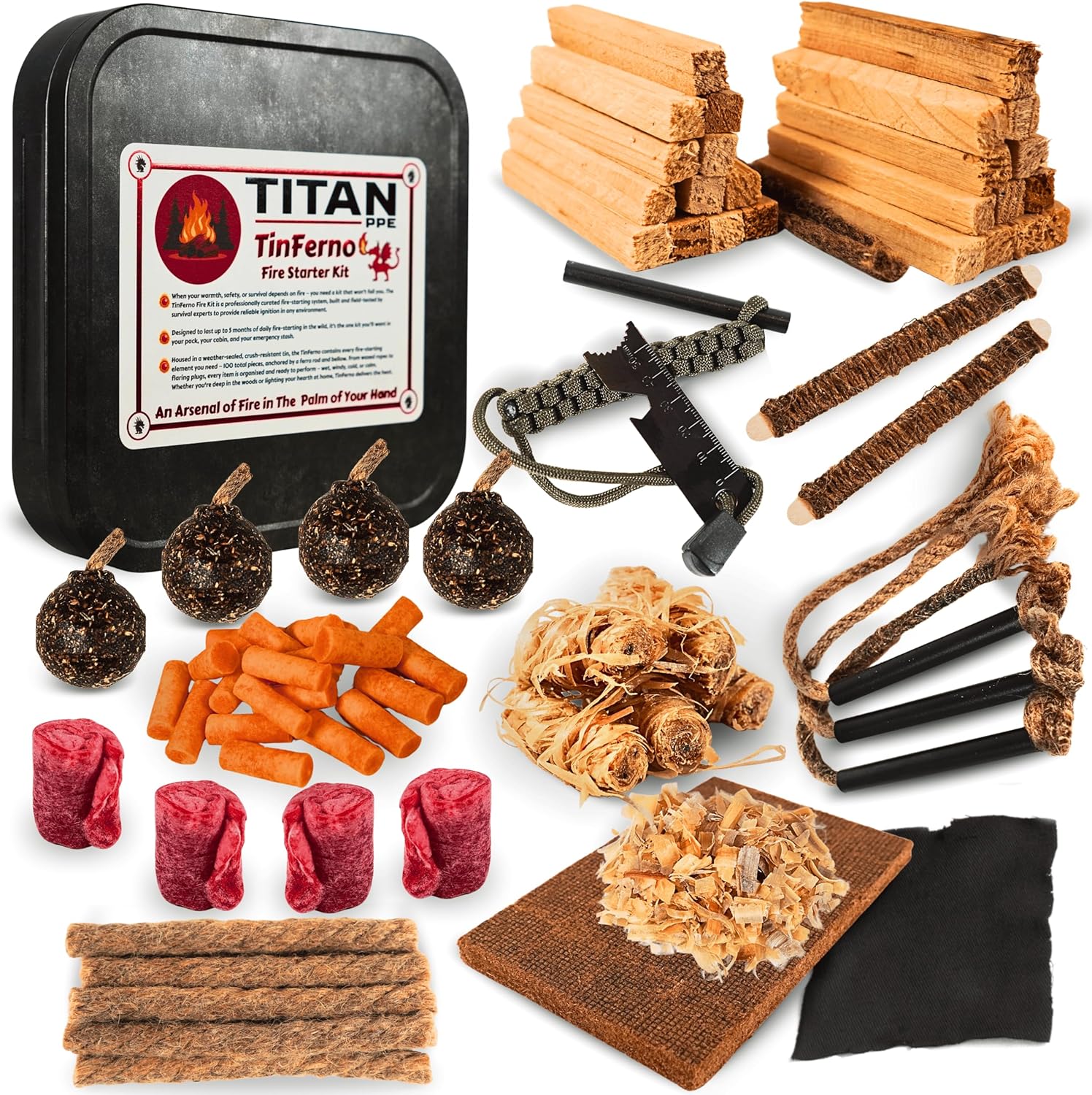
TinFerno Fire Starting Kit – 100pc Fire Starter for Campfires, Ferro Rod, Magnesium Flint, Char Clot...
Best Value
Survival Kit, 250Pcs Survival Gear First Aid Kit with Molle System Compatible Bag and Emergency Tent...

Best Value
TYT Kinetic Recovery Rope,(1.26 in x 30ft Red) 56,000lbs Snatch Strap, Heavy Duty Stretch Nylon Towi...